

Last month I spent a wonderful week at the 2026 OCP Global Summit reconnecting with customers and friends, and sharing knowledge of how the industry continues to evolve.
This post summarizes the major developments I witnessed and discussions I shared. As always, the booth demonstrations were impressive and the talks were informative, but my most memorable takeaways were from the hallway track. With so many (15000!) engaged people in one place, I delighted in the adhoc conversations that took place between the organized events over simple coffee.
Pre-Summit: Caliptra Workshop
As last year, a separate dedicated event was held offsite hosted at Microsoft’s campus in Mountain View. This event focused on Caliptra, the open source root of trust IP that was introduced in 2023 and is now beginning to appear in an increasingly diverse roster of silicon devices.
The first set of these devices have made it through the Caliptra trademark audit program, many as early adopters. These forerunners had to contend with a series of moving targets as the trademark program itself continued to develop in parallel with their SoC development. We are grateful for their help working through the kinks in the process, which is now much more streamlined for subsequent chip makers.
A personal highlight of the day’s presentations was seeing at least seven of our customers and partners take the stage to share real-world Caliptra success stories.
This adjacent event saw 400 attendees, nearly double last year. This is a clear sign that the Caliptra ecosystem is on a path to maturity. As Caliptra is integrated into an ever wider range of SoCs, it’s become clear that additional development support is needed. The engineering team behind the Caliptra development is very small and not equipped to handle a rapidly growing community of integrators. To that end the CHIPS Alliance has partnered with lowRISC to provide additional resources to support the growth and increased development needs.
Other new Caliptra developments that were announced at the workshop include:
- The upcoming Caliptra 2.2 release will contain a USB 2.0 peripheral IP. Generously donated by NXP, this includes a decades old, battle-hardened IP core, which will greatly enhance performance of streaming boot implementations.
- Also in Caliptra 2.2, the Adams Bridge PQC accelerator is reduced in size by 50%, and now provides a fully masked implementation, Dual Core Lock Step (DCLS), control-flow monitoring, and hardened register implementations.
- A lot of open discussion took place over the Device Ownership Transfer (DOT) features. There was a great deal of discussion about the specification, which remains a work in progress, though it is already seeing adoption in some vendor devices.
Expo Floor
It’s always worthwhile to spend at least some time walking the expo floor. When we review a system at Tetrel, it’s frequently just a zip file of source code, an ssh terminal, or perhaps a single compute sled.
At my first OCP summit in 2024 I recall being surprised that there were as many plumbers and electricians as there were computer engineers in attendance (a pipe fitting vendor that I spoke with was equally surprised about me).
It’s easy to focus narrowly on the security tracks and working groups and forget that all of this needs to be powered and cooled in standardized and compatible ways. While walking the floor, I visited many customer booths to see the physical hardware our work helped secure.
Security Track
As last year, the security track talks took place all in one room on a single day. This was a deliberate organizational tactic by the conference organizers, and it helped put all the like-minded people in one place to maximize useful conversations. There were many great talks, but two that stood out are:
- An Introduction to Attesting Hitlessly Updatable Systems: Presenting a new design allowing firmware updates without reboots, and without violating TCB measurement guarantees of the system. There is more work to do here, and Matt King put out a call for help from implementers.
- Integrated HSM: Bringing Silicon-Level Key Security to the Server Tray: Marvell, Microsoft, and Oracle have introduced an open source HSM (Project Tessera) to provide key management to the wider SoC and system. This continues the trend of open source security IPs (along with Caliptra Root-of-Trust) that allow everyone to benefit from improved hardware security.
Hallway track
Throughout the conference I enjoyed many conversations with people from all over the industry. I mention just a few of the highlights worth sharing here:
-
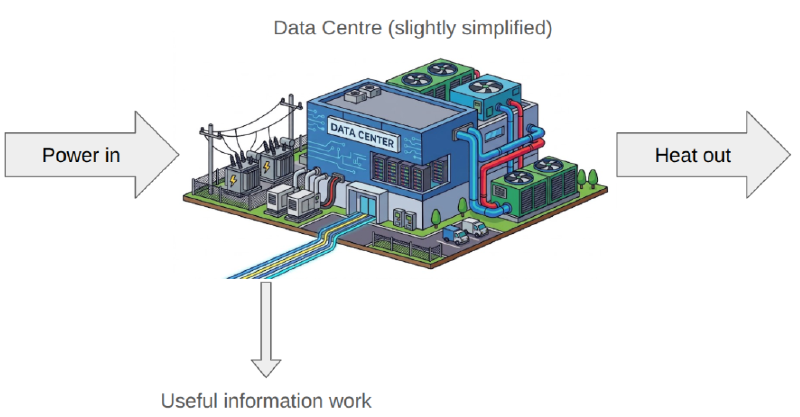
Collectively we have spent significant effort improving the integrity and confidentiality of the compute systems and data paths. But the availability is also vitally important. In that regard, the power, cooling, and building management systems are so vital to the availability of the data centre operations. In several conversations it became clear that there is a strong need to expand the OCP S.A.F.E. assessment program to include these systems. There is a general consensus that the devices in these systems have undergone comparatively less security scrutiny than those in the data path. If you are a vendor of these components, you should expect your cloud and neocloud customers to start asking about OCP S.A.F.E. compliance, and you are strongly encouraged to be proactive about engaging with an approved SRP.
-
The OCP S.A.F.E. program is now in its third official year. While up to now it has primarily been driven by the procurement processes at the largest cloud services providers (i.e. Google and Microsoft), conversations indicate a strong interest in the program among other cloud and neocloud operators, large AI labs, and sovereign cloud initiatives. These companies recognize the value of standardizing and sharing the burden of firmware security review, and are working to incorporate the program into their own supply chain security programs. This is a welcome expansion, since increased demand allows vendors to amortize the costs over a larger set of customers. If you are interested in learning more about how the OCP S.A.F.E. program can integrate into your supply chain security and procurement programs, please reach out.
-
The OCP S.A.F.E. program is defined at the component level because the short form reports contain a hash digest of an individual firmware module however I had several conversations with OEMs who are being asked for OCP S.A.F.E. compliance of entire servers and racks. This requires careful coordination across the entire supply chain, as OEMs are rarely in a position to have source code assessed themselves. Fortunately, many of the constituent parts already come with their own OCP S.A.F.E. reports, and many more are in the pipeline. This directly ties into OCP S.O.L.I.D. which was made a mandatory requirement for OCP S.A.F.E. in Oct 2026. This related program defines product and system level security requirements which pairs nicely with the OCP S.A.F.E. assessment framework.
-
As with any crowd of technical people, AI was a frequent part of every conversation. There was particular interest in how companies like Tetrel are using AI to help find and fix vulnerabilities. This topic deserves its own dedicated post, so I will not attempt that here, but I do want to briefly address a common misconception among non-practitioners: that LLMs are a sort of automated “scanner”. While on the surface, these new tools may appear usable in that way, and they produce output that takes the expected format, we have never seen high quality results from any models when used in this fashion. Rather we find that these tools are an accelerator for our own human expertise and intuitions, and they work best when driven interactively. If you like analogies, consider the use of LLMs like upgrading from a hand saw to a table saw; you still need the carpenter, they’re just far more efficient.
-
Finally, some common pain-points stood out among my conversations. It is clear that there are areas for improvement everywhere, but a couple that stood out as high impact for the OCP security community in particular are:
- OCP S.A.F.E. lacks a reference implementation for the validation steps. The github repository has reference scripts an SRP can use to create signed SFR artefacts, but there is precious little in the way of verifying those SFRs against the firmware running on real hardware. Validation is fragmented and platform-specific. Even the early adopters struggle to validate firmware across their heterogeneous fleets. This hinders the adoption for new CSPs and Neoclouds, as well as OEMs who are being required to validate full rack systems. A standard reference implementation is needed so that CSPs, OEMs, and other downstream operators, can realise the benefits of the OCP S.A.F.E. framework without having to write their own bespoke code to retrieve measurements of each component’s firmware. Device vendor’s should provide (and maintain) their device-specific validation code within this reference implementation when they publish their SFR.
- OCP S.A.F.E. is an assessment framework that validates a product was built well. OCP S.O.L.I.D. attempts to augment this program with a set of product security requirements to ensure that what is built is the right thing. As written today, OCP S.O.L.I.D. is under-specified. Today it can be considered a starting point but the consensus is that it needs work. Currently the list contains just ~40 requirements, which is far too few. The ones that are included, do not describe the spectrum of options available to implementers, making product planning difficult. Lastly, many of the requirements are product- or system-level, while the OCP S.A.F.E. program that validates them is component level. There is some work needed to resolve this mismatch. As with other OCP security programs, these issues will be worked out as product vendors adopt them and help develop the program alongside their products. The logical “call to action” here is for vendors to review the requirements and make improvements and additions where necessary.
A Look Ahead
The conference has outgrown the facilities in San Jose. Next year (Oct 4-7) it is moving to San Francisco and the call for sponsors is already open. There is a lot of work to do in the meantime, and I look forward to working with all our customers to help them make big announcements next year.